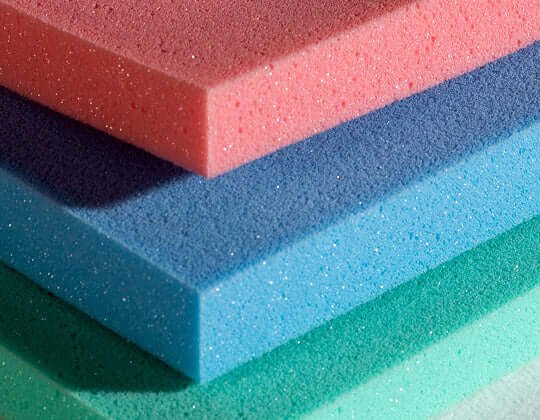
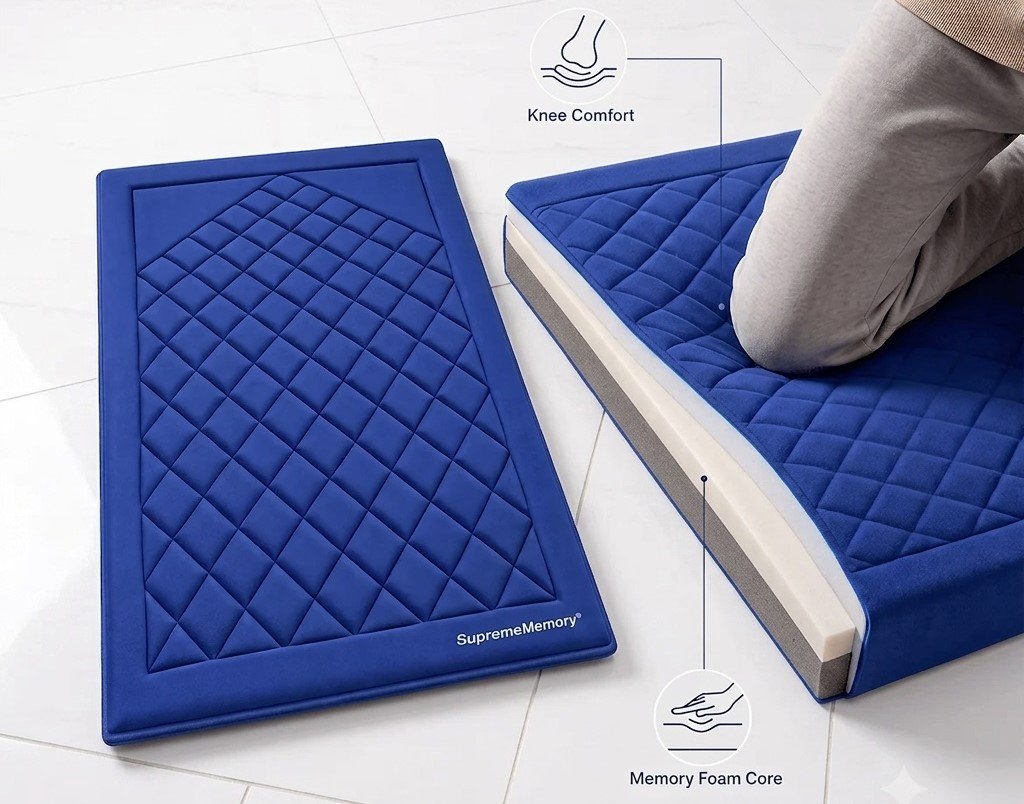
Does your janamaz feel too thin, hard, or uncomfortable during daily prayers? The right prayer mat can make a noticeable difference to your daily prayer routine. While a traditional jai namaz may work well for many people, those who spend more time kneeling or praying several times a day may prefer a softer, more supportive surface.
For daily use, a memory foam prayer mat can be a practical choice. Its cushioned surface provides added support under the knees, feet, and other pressure points while keeping the mat easy to use indoors.
What Makes a Good Prayer Mat?
A good prayer mat should provide a stable, clean, and supportive surface for Salah. It should also be easy to maintain and suitable for regular use.
Before choosing one, consider these important features:
- Cushioning: A padded surface can provide additional support during standing, bowing, and prostration.
- Surface texture: The fabric should feel pleasant under the hands and forehead without being overly slippery.
- Grip: A non-slip or stable base helps keep the mat in place on tiled, marble, or wooden floors.
- Size: It should provide enough space for your normal prayer movements without taking up unnecessary room.
- Easy maintenance: Since it is used frequently, the mat should be simple to clean and care for.
- Durability: Daily folding, unfolding, and storage can put wear on the material, so construction is important.
Why Choose a Memory Foam Prayer Mat?
A memory foam prayer mat is designed with cushioning beneath the surface. This gives it a softer feel than a thin, traditional mat.
The extra padding can be particularly useful for people who find hard floors uncomfortable during prolonged kneeling or prostration. It also creates a more cushioned surface for the feet while standing.
A well-designed foam mat should balance softness with stability. Excessively soft padding may feel unstable, while very thin foam may not provide enough support.
For regular prayers, a medium-cushioned design can offer a practical balance between support and ease of movement.
Memory Foam Prayer Mat vs. Traditional Jai Namaz
Both options can be suitable, but they serve slightly different preferences.
| Feature | Memory Foam Prayer Mat | Traditional Jai Namaz |
| Cushioning | Higher | Usually lower |
| Support on hard floors | Good | Depends on thickness |
| Portability | Depends on design | Usually very easy |
| Daily indoor use | Well suited | Well suited |
| Foldability | Varies by construction | Usually easy |
| Surface feel | Soft and cushioned | Often thinner and firmer |
If your main priority is additional cushioning, a foam-based option may be more suitable. If you prefer something lightweight and easy to fold into a small space, a traditional mat may be the better choice.
What Should You Look for When Buying a Janamaz in Pakistan?
The Pakistani market offers prayer mats in many fabrics, thicknesses, patterns, and constructions. Your choice should depend on where and how you plan to use it.
Consider Your Flooring
Marble and ceramic tile floors can feel hard during prayer. A cushioned mat can provide a softer surface between you and the floor.
For carpeted rooms, you may need less padding because the carpet already provides some cushioning.
Check the Base
A prayer mat should stay reasonably stable during movement. This is especially useful on smooth floors such as marble or tile, which are common in Pakistani homes.
Look for a base that provides a secure grip without making the mat difficult to fold or store.
Choose Practical Thickness
Thicker does not always mean better. A very thick mat can change how stable the surface feels during prayer.
For daily Salah, look for enough cushioning to provide support while still allowing natural movement.
Think About Cleaning
A janamaz used every day should be easy to keep clean. Check the care instructions before buying, particularly if the mat has foam inside.
Regularly airing the mat and keeping it in a dry, clean place can also help maintain it between uses.
Is a Padded Prayer Mat Better for Daily Prayers?
For people who prefer additional cushioning, a padded prayer mat can be a useful choice for daily Salah.
It can be especially appealing when prayers are performed on hard flooring. The added layer provides a softer surface beneath the knees and feet without requiring a separate cushion.
However, personal preference matters. Some people prefer the firm feel of a traditional jai namaz, while others find a cushioned surface more suitable for regular use.
Also Read: Memory Foam vs Orthopedic Prayer Mat
How Diamond Supreme Foam Approaches Everyday Prayer Comfort
With its experience in foam products, Diamond Supreme Foam offers options designed around the practical needs of everyday users. A memory foam prayer mat is particularly suited to people looking for additional cushioning without using a separate support cushion during prayer.
When choosing a mat, the goal should not simply be to find the softest option. Instead, look for a design that combines cushioning, stability, suitable size, and easy care. That balance can make a prayer mat more practical for repeated daily use.
How to Choose the Right Prayer Mat for Your Needs
A simple checklist can make the decision easier:
- Identify the floor: Hard flooring may benefit from additional cushioning.
- Decide how much padding you prefer: Choose based on your personal comfort and stability needs.
- Check the size: Make sure it provides sufficient space for your prayer movements.
- Look at the base: A stable underside is important on smooth floors.
- Consider maintenance: Check how the material and foam should be cleaned.
- Think about storage: If you regularly move or store the mat, choose a design that suits your available space.
The best choice is ultimately the one that fits your prayer routine, flooring, storage needs, and personal preference.
A Supportive Prayer Mat Can Make Daily Salah More Comfortable
The best prayer mat is not necessarily the thickest or softest one. It should provide the right balance of cushioning, stability, size, and practicality for your daily routine.
For people who pray on hard floors or prefer a softer surface, a memory foam prayer mat can be a useful alternative to a thin traditional janamaz. With the right design, it can provide added cushioning while remaining practical for everyday Salah.
Frequently Asked Questions
- What is the best prayer mat for daily use?
A good daily-use prayer mat should have suitable cushioning, a stable base, a practical size, and an easy-care surface. A memory foam option can be useful for people who prefer additional support on hard floors.
- Is a memory foam prayer mat good for knees?
A cushioned mat can provide a softer surface beneath the knees during prayer. However, the level of support depends on the foam thickness, density, and overall construction.
- What is the difference between a janamaz and a prayer mat?
There is generally no major functional difference. “Janamaz,” “jai namaz,” and “prayer mat” are commonly used terms for the mat placed beneath a person during Salah.
- Can I use a prayer mat on marble or tile floors?
Yes. A prayer mat can be used on marble, ceramic tile, and other hard floors. If the floor feels uncomfortable during kneeling or prostration, a cushioned design may provide a more supportive surface.
- How should I care for a memory foam prayer mat?
Follow the manufacturer’s cleaning instructions. Avoid soaking or washing the mat in a way that could damage its foam or backing. Keep it dry and store it in a clean, well-ventilated place when not in use. Can you wash prayer mat in a washing machine?