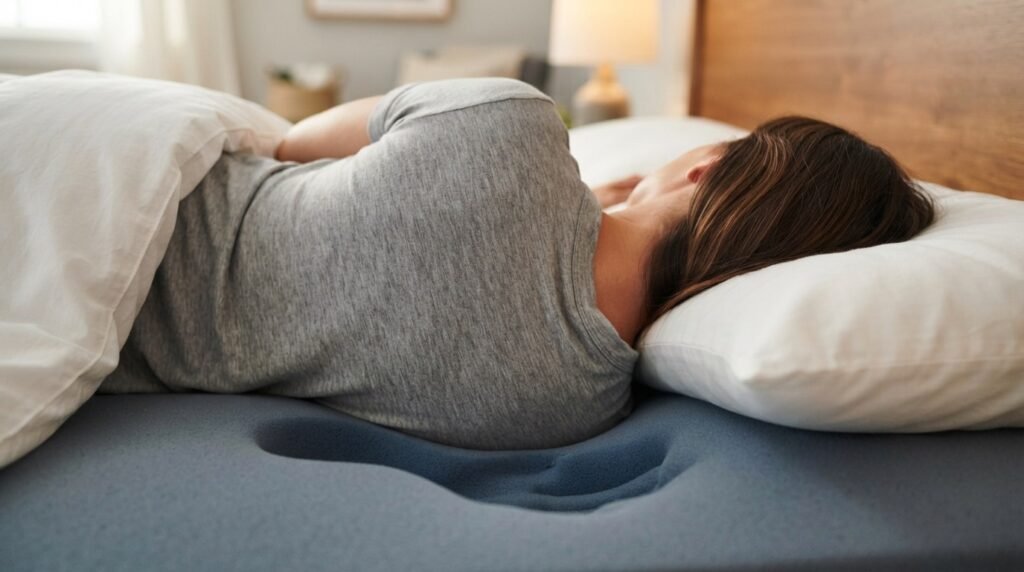
Ever lie down on a foam bed and notice it slowly sink around your shoulders and hips? That is not a trick of the material. It is how the foam is designed to work.
Memory foam mattress contours around the body because it is viscoelastic: it softens in response to body heat and pressure, then slowly spreads that pressure across a larger area. Below, you will see how this works and what it means for your sleep.
What is Memory Foam?
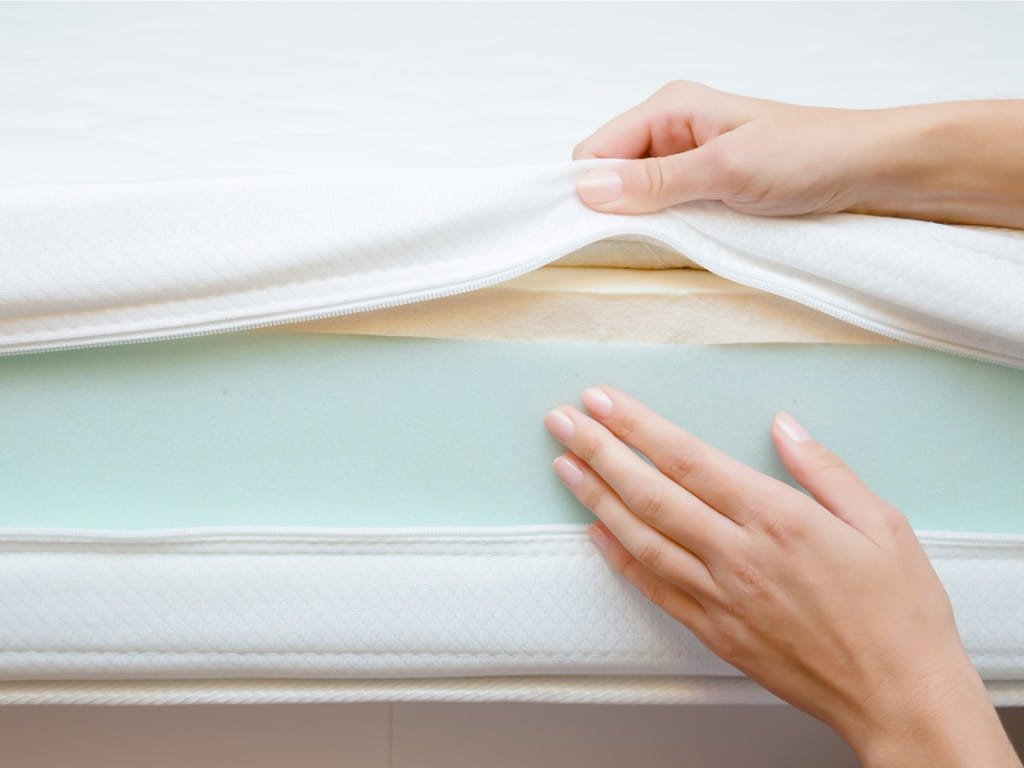
Memory foam is a type of polyurethane foam with added chemicals that make it both soft and slow to bounce back. NASA-funded research in the 1960s first developed the material to improve cushioning for pilots. Today it is common in beds, pillows, and toppers.
Unlike regular foam, it does not push back right away. It yields first, then shapes itself around whatever is resting on it.
Why Memory Foam Contours: The Short Answer
Three things work together:
- Heat: Your body warms the foam, and warmer foam becomes softer.
- Pressure: Heavier body parts, like hips and shoulders, press deeper into the foam than lighter parts, like your waist.
- Slow recovery: The foam returns to its original shape gradually, so it holds your outline while you lie there.
That is why a memory foam mattress feels different from a spring or regular foam bed. It adjusts to your shape instead of pushing against it.
How Heat and Pressure Change the Foam
Memory foam is made of tiny open cells, a bit like a very fine sponge. When you lie down, the cells under your body compress and release air slowly. The heat from your skin softens the cell walls, so the foam gives way more easily at the points that touch you.
Areas that touch you less, like the small of your back, stay firmer. This difference creates the “hug” many people describe. The foam is not reading your mind. It is simply reacting to where you are warm and where you press hardest.
What Contouring Does for Your Body
Because the foam spreads your weight, less pressure lands on any single spot. This can be useful in several ways:
- Fewer pressure points: Hips, shoulders, and knees sink in a little instead of bearing all your weight.
- Better spinal support: The foam fills gaps under your waist and neck, which can help keep your spine in a neutral line.
- Less motion transfer: Because the foam absorbs movement, you may feel less of your partner’s tossing and turning.
Results vary from person to person. If you have ongoing back or joint pain, a doctor or physiotherapist can advise you better than any mattress description.
Why You Sink More on Some Nights Than Others
You may notice your mattress feels softer in summer and firmer in winter. This is normal. Because the material responds to temperature, a warm bedroom softens it, and a cool one makes it feel firmer.
This matters in Pakistan, where summers in cities like Lahore, Multan, and Karachi can get very hot. In a warm room, foam can feel softer than it does in an air-conditioned one. During winter, it may feel firm for the first few minutes until your body heat warms it.
Does Density Change How Much It Contours?
Yes. Density, meaning how much foam is packed into a given volume, affects both feel and durability.
- Lower density: Softer and sinks easily, but may wear out faster.
- Higher density: Feels denser and more supportive, and usually lasts longer.
Density is not the only factor. Firmness level and the layers underneath also change how deeply you sink. Ask for the density and layer details before you buy, and be cautious if a seller cannot provide them.
Does Your Sleeping Position Change Things?
It does, because your weight sits differently in each position.
- Side sleepers put heavy pressure on shoulders and hips. A softer foam that allows some sink usually works well.
- Back sleepers need support under the lower back. A medium-firm foam tends to suit them.
- Stomach sleepers can sink too deep in soft foam, which may strain the lower back. Firmer foam helps keep the hips level.
Your body weight also plays a role. Heavier people sink deeper and may need a firmer or thicker mattress. Lighter people may not warm or compress the foam enough to feel much contouring.
Also Read: How Thick Should a Mattress Be?
Common Drawbacks of Deep Contouring
Contouring is useful, but it has trade-offs worth knowing:
- Heat buildup: Foam can hold warmth, which is a concern in Pakistan’s summers, especially during load-shedding when fans and ACs go off. Look for gel-infused or open-cell foam designed to release heat, and use breathable cotton sheets.
- Slower movement: Changing position can feel harder on very soft foam.
- Initial smell: New foam may have a mild odor. Airing it in a ventilated room for a day or two usually clears it.
How to Test Contouring Before You Buy
You do not need technical tools. Try these steps in a showroom:
- Lie on the mattress for at least 10 minutes, not just a few seconds.
- Try your usual sleeping position.
- Check whether your spine feels straight and your shoulders and hips sink without strain.
- Roll over and see how easy it is to move.
- Ask about the foam’s density, layers, and warranty terms in writing.
Also check the return or exchange policy, since some people need a few weeks to adjust to the feel.
Final Thoughts!
Memory foam contours because it reacts to heat and pressure, then recovers slowly. That behavior is what produces the cradling feel, and it explains why the same bed can feel different in different seasons. Choose a density and firmness that fit your weight and sleep position, and test it for longer than a minute.
FAQs
Why does memory foam sink where my body is warmest?
Warmth softens the foam’s cell structure, so the areas touching your skin and holding the most heat give way first. Cooler areas stay firmer.
How long does memory foam take to return to its shape?
It usually takes a few seconds to a minute, depending on the foam’s density and the room temperature. Slow recovery is a normal sign of viscoelastic foam.
Is contouring good for back pain?
It may help some people by reducing pressure points and supporting spinal alignment, but it is not a medical treatment. If your pain is persistent, speak with a doctor.
Can memory foam feel too hot in Pakistan’s summer?
Yes, standard foam can trap heat. Gel-infused or open-cell foam, a breathable cover, and a cooler bedroom can reduce the problem.
Does a memory foam mattress lose its contouring over time?
Over the years, foam can soften and develop body impressions, especially lower-density types. Rotating the mattress and using a supportive base can help it wear more evenly.