Ever wondered why some mattresses feel supportive for years while others begin to sag after just a few seasons? Choosing the right mattress isn’t just about the initial “cloud-like” feel in the showroom; it is a long-term investment in spinal alignment and restorative health.
In the Pakistani market, where temperatures fluctuate and durability is a priority, two technologies lead the industry: High-Density (HD) Foam and Gel-Infused Foam. While both serve very different sleep needs.
This comprehensive comparison will help you decode which foam technology will sustain your sleep quality for the next decade.
1. What is High-Density (HD) Foam?
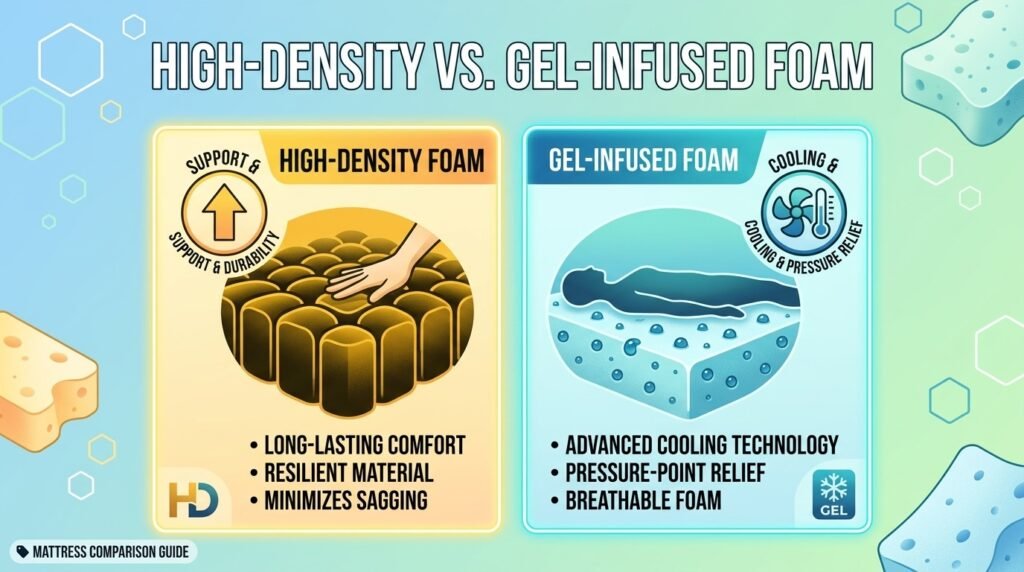
High-density foam is the backbone of the luxury mattress industry. Unlike standard foam, HD foam is characterized by its weight and structural integrity. In technical terms, foam with a density above 5 lbs/ft³ is classified as high-density. Because the cells are packed more tightly together, the foam provides a firm, “push-back” support that prevents the body from sinking into an unnatural curve.
Key Benefits of High-Density Foam:
- Superior Spinal Alignment: By resisting deep compression, HD foam keeps the spine neutral, a critical requirement for back and stomach sleepers.
- Industrial-Grade Durability: Because there is more material per cubic inch, HD foam resists the “body impressions” or sagging that plague cheaper alternatives.
- Robust Weight Handling: It provides a stable, non-shifting base that is ideal for heavier individuals who require consistent support.
- Hypoallergenic Properties: The dense structure makes it difficult for dust mites and allergens to penetrate the core, promoting a cleaner, healthier sleep environment.
Typical Drawbacks:
- Initial Firmness: It may feel “stiff” initially, which might be less comfortable for side sleepers who need pressure relief for their shoulders.
- Heat Retention: The tight cell structure can limit airflow, occasionally trapping body heat unless paired with breathable covers.
2. What is Gel-Infused Foam?
Gel-infused foam represents a significant leap in sleep technology. By integrating cooling gel beads or liquid gel layers into a memory foam matrix, this material addresses the primary complaint of traditional foam: overheating. Many GelCool mattress designs utilize this technology to create a surface that actively manages the microclimate of the bed.
Advantages of Gel-Infused Foam:
- Targeted Pressure Relief: It retains the “contouring” magic of memory foam, cradling the hips and shoulders to reduce tossing and turning.
- Active Temperature Regulation: The gel particles absorb ambient body heat and disperse it away from the sleeper, making it the gold standard for Pakistan’s hot summer nights.
- Adaptive Comfort: It offers a medium-firm, “responsive” feel that adapts quickly as you change positions.
- Enhanced Blood Circulation: By removing pressure from “hot spots,” gel foam helps maintain better blood flow throughout the night.
Potential Considerations:
- Softer Feel: It is inherently plusher than HD foam; heavier sleepers should ensure it is paired with a high-density base layer for foundational support.
- Core Dependency: To maintain long-term shape, gel foam performs best when supported by a high-resilience core.
3. The Head-to-Head Comparison
To help you choose, here is a technical breakdown of how these two materials compare in real-world conditions.
| Feature | High-Density (HD) Foam | Gel-Infused Foam |
| Primary Support | Firm, Stable, and Rigid | Medium-Firm, Contouring, and Adaptive |
| Durability Expectation | Exceptional (10-12+ Years) | Moderate to High (8-10 Years) |
| Pressure Relief | Moderate (Focuses on support) | Excellent (Focuses on comfort) |
| Heat Management | May retain heat in summer | Stays cool via thermal conductivity |
| Best Sleep Positions | Back & Stomach Sleepers | Side, Front, & Combination Sleepers |
| Body Type | Heavier individuals (80kg+) | Light to Medium-weight individuals |
| Price Point | Moderate Investment | Premium (due to gel technology) |
4. Choosing the Right Option for Long-Term Support
Selecting between these two comes down to your personal biology and environment. Use this expert checklist to decide:
A. Analyze Your Sleeping Position
- Back & Stomach Sleepers: High-density foam is the clear winner here. It prevents the hips from dipping, which is the leading cause of lower back pain.
- Side & Combination Sleepers: Gel-infused foam provides the “sink” needed for the shoulders and hips, preventing pins-and-needles sensations.
B. Evaluate Weight Considerations
- Heavier sleepers benefit from the structural resistance of high-density foam, as it won’t “bottom out” over time.
- Lighter sleepers may find HD foam too hard and will likely prefer the gentle embrace of gel-infused layers.
C. Temperature Sensitivity
In regions with high thermal intensity, gel-infused foam is not just a luxury; it is a necessity for uninterrupted sleep. If you sleep hot, the gel-infused “GelCool” technology is the superior choice.
5. Enhancing Comfort with Bedding and Accessories
Even the most advanced mattress performs better when paired with the right accessories:
- Breathable Sheets: Use Tencel, Linen, or high-thread-count Cotton to allow the foam’s cooling properties to work effectively.
- Lightweight Blankets: Avoid heavy polyester comforters; opt for ventilated throws that don’t trap heat.
- Mattress Protectors: Ensure your protector is “breathable.” A plastic-backed protector can negate the cooling benefits of a gel mattress.
- Zoned Pillows: Pair your mattress with a gel-infused or ventilated pillow to keep the head and neck at a stable temperature.
6. Tips for Maximizing Mattress Longevity
A Diamond Supreme Foam product is built to last, but these maintenance tips ensure it stays in “Day 1” condition:
- Rotate Regularly: Every 3-6 months, rotate the mattress 180 degrees to prevent uneven wear.
- Avoid Structural Stress: Never allow jumping on the bed, as this can snap the cell walls of even high-density foam.
- Moisture Control: Keep the mattress dry. Use a protector to prevent sweat and humidity from degrading the foam’s molecular structure.
- Solid Foundation: Ensure your bed frame has adequate slats. A sagging base will eventually cause even a high-density mattress to fail.
Read More:- Foam Materials – Foams Technology
Conclusion: Which Foam Wins?
The “better” foam is the one that aligns with your lifestyle. High-density foam is the champion of durability and spinal alignment, making it the perfect choice for those prioritizing long-term orthopedic health. Gel-infused foam, found in many premium GelCool models, is the ultimate solution for side sleepers and those who struggle with the heat.
Ultimately, identifying your sleep posture and local climate needs will lead you to the mattress that ensures consistent support and restorative sleep for years to come.
Frequently Asked Questions (FAQs)
1. Which foam type is better for long-term durability?
High-density foam generally offers the longest lifespan due to its higher material-to-air ratio, which resists sagging better than softer foams over a 10-year period.
2. Can a gel-cool mattress last as long as high-density foam?
Yes, provided it features a high-density support core. The combination of a cooling gel top and an HD base offers both the comfort of gel and the longevity of high-density foam.
3. Is gel-infused foam suitable for back sleepers?
It is suitable if the mattress is a “Hybrid” or “Multi-layer” design. A pure gel-foam mattress may be too soft for some back sleepers, who often prefer the firmer surface of HD foam.
4. Do high-density foam mattresses sleep hot?
They can, due to their dense cell structure. However, using breathable bedding or a ventilated mattress topper can significantly mitigate heat retention.