Think back to the last time you woke with your neck twisted into an awkward pretzel, rubbing your shoulders and blaming the mattress or wondering why you felt exhausted before the day had properly begun. The problem may actually be coming from something beneath the bed. Often-ignored items can significantly affect energy levels across Pakistan’s changing climates, from intensely humid summers to cold, rainy winters. That is why the support we choose for rest can make a dramatic difference when deciding between sleep styles.
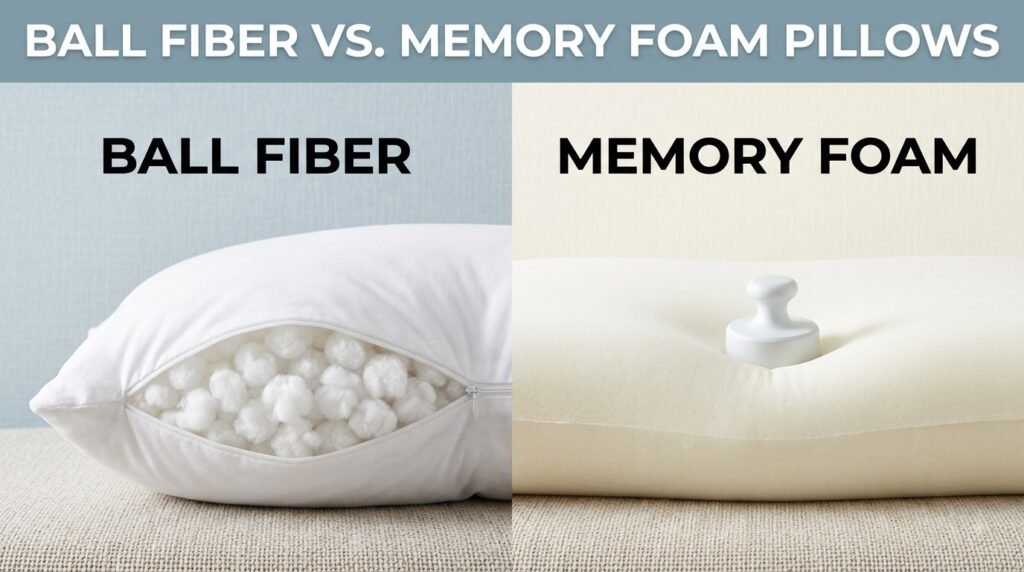
When you browse bedding aisles or online listings, two familiar options usually stand out: classic ball fiber pillows and modern memory-foam pillows. They offer distinctly different kinds of comfort, so choosing between them involves more than grabbing the softest pillow available. Ball fiber provides a cloud-like, adjustable bounce, while memory foam pillows offer firmer, more precise support that can help prevent neck strain.
Knowing how the two differ matters if you want to improve your sleep quality. Let’s compare these two favorites with our local climate, sleep patterns, and physical needs for restful sleep.
The Allure of the Cloud: Understanding Ball Fiber
Ball fiber has been a staple in Pakistani homes for good reason. Thousands of tiny polyester clusters are woven into dense balls, creating an airy feel that offers comfortable support. Sleepers can punch the pillow until it reaches the firmness they want or fold the head support in half to get the right height. Ball fiber is a dependable choice. One of these pillows’ main advantages is their breathability.
Temperatures in our region can skyrocket quickly, so you need a pillow that won’t hold in all your body heat. Ball fiber’s loosely clustered structure lets air move freely through the material while keeping the pillow soft, inviting, and wonderfully lightweight. It’s also easy to maintain and wash at home, without professional help. And for anyone making the bed, they make things much simpler.
The Precision of Support: Why We Love Memory Foam
Memory foam pillows are specialized pieces of sleep technology. They respond to body heat and weight, gradually softening and adjusting once you lie down. As the material shifts, it fills the natural spaces between your shoulders and head, providing ideal relief for chronic neck pain or tension headaches.
Alignment matters here. Keeping your cervical spine in a neutral position stops your head from sinking too far or resting at an awkward angle while providing support tailored specifically to you. Side sleepers, especially, may appreciate this structure because it helps keep the spine straight throughout the night, meaning less neck stiffness in the morning.
Read More: What is Memory Foam Made of?
Climate, Lifestyle, and Longevity
When choosing between memory foam and ball fiber, consider the environment where you sleep. Pakistani summers can be intense, and memory foam’s dense structure may hold heat beneath your head. Newer manufacturing methods have addressed this concern to some extent: many models now include cooling gel infusions or ventilation channels that can reduce heat buildup. If warmth disrupts your sleep, focus on mattresses advertised with these “cool-touch” features.
Longevity matters too. Even with regular fluffing, ball fiber gradually compacts. The clusters eventually lose their bounce, which may mean replacing the item every year or two to preserve that “new” feeling. Memory foam retains its shape and does not “bottom out” as quickly, keeping your investment supportive for years, although its appearance may change over time.
How to Pick Your Perfect Match
Which pillow suits you best depends on what comfort means to you. If you prefer a soft, plush surface that can be adjusted easily and want something nest-like, a pillow filled with ball fiber may be a good fit. It’s also versatile and easy to care for, making it well suited to people who change positions often.
For lasting health benefits, especially if you wake up with a stiff neck or have been advised to pay closer attention to spinal alignment, memory foam pillows offer more consistent, professional-grade support than loose-fill pillows. They provide dependable support and much-needed recovery after an exhausting day’s work, not merely luxurious comfort.
Conclusion: Choose the Right Pillow!
Choosing the right sleep gear can shape how the next day begins. Whether you prefer an airy, carefree ball-fiber option or a supportive foam model, the aim is the same: to wake feeling refreshed instead of stiff and sore. Think about how your choices affect your sleep.
Take a look at your current habits, decide which sleeping position suits you best, and choose an item that addresses any aches or pains you experience. A more restful night may be closer than you think; sometimes, it starts with choosing the right surface for your head.
FAQs
- Which is better, ball fiber or memory foam pillows?
The better choice depends on your sleeping position and support needs. Ball fiber pillows are soft, lightweight, and breathable, while memory foam pillows offer firmer support and better contouring for the head and neck. - Is memory foam better for neck support than ball fiber?
Yes, memory foam generally provides better neck support because it conforms to the shape of your head and neck. It can help maintain a more neutral sleeping position, especially for side and back sleepers. - Which pillow is better for hot weather in Pakistan, ball fiber or memory foam?
Ball fiber pillows are generally more breathable and allow better airflow, making them a suitable option for Pakistan’s warmer climate. However, some memory foam pillows feature cooling materials or ventilation technology for improved temperature regulation. - Are ball fiber pillows good for everyday use?
Yes, ball fiber pillows can be a practical choice for everyday use. They are soft, lightweight, and easy to maintain, making them suitable for sleepers who prefer a plush and comfortable pillow. - How do I choose the right pillow for sleeping?
Consider your sleeping position, preferred firmness, neck support, and temperature preferences. Side sleepers often benefit from a supportive memory foam pillow, while those who prefer a softer and more breathable option may find ball fiber pillows more suitable.