When you’re browsing a furniture showroom, it’s easy to get distracted by the aesthetics—the sleek wooden legs, the trendy velvet upholstery, or the perfect shade of navy. But a sofa’s true “soul” isn’t its cover; it’s what lies underneath.
The foam inside determines whether your investment will stay comfortable for a decade or become an uncomfortable “sinkhole” within a year. If you’ve ever felt the wooden frame of a chair poking through the cushion, you’ve experienced the failure of low-density foam.
To buy furniture that actually lasts, you need to understand the science of high-density materials.
1. What Exactly Is Foam Density? (Hint: It’s Not Firmness)
A common mistake shoppers make is confusing density with hardness.
- The Definition: Density refers to the weight of the foam per cubic meter (measured in $kg/m^3$).
- The Science: High-density foam has more solid material and fewer air bubbles. These tightly packed cells act like tiny springs that can survive thousands of “compression cycles” without losing their shape.
- Firmness vs. Density: Think of it this way—firmness is how the cushion feels the moment you sit down (soft vs. hard). Density is how long that cushion will provide support before it collapses. You can have a high-density foam that feels soft like a hotel pillow, but it will still be durable because of its structural integrity.
2. The Hidden Cost of Low-Density Foam
Budget furniture often uses low-density foam ($15$ to $20\ kg/m^3$) to keep prices down. While it feels great in the store, the thin cell walls break down quickly with daily use. This leads to two major issues:
- Puddling: The foam shrinks, leaving excess fabric that looks wrinkled and worn.
- Bottoming Out: The foam loses its “push back,” leaving you sitting directly on hard springs or wooden slats. This isn’t just an eyesore; it can lead to genuine hip and back pain over time.
3. How to Choose Furniture Built to Last
If you want a sofa that survives daily lounging, kids, or pets, aim for a density between 28 and 32 $kg/m^3$.
- Pro Tip: Look for HR Foam: High Resilience (HR) foam is the gold standard. Its unique cell structure offers a “support factor” that contours to your body while bouncing back instantly.
- The Diamond Standard: Products like the Diamond Seating Range use engineered high-density foam designed to stay sleek and tailored for over 10 years.
4. The “Showroom Test”: How to Spot Quality
Since you can’t usually unzip a cushion to see the foam, use these three tricks to evaluate a piece before you buy:
| Test | What to Do | What to Look For |
| The Lift Test | Pick up a seat cushion. | High-density foam is heavy. If it feels light and “airy,” it’s likely low-quality. |
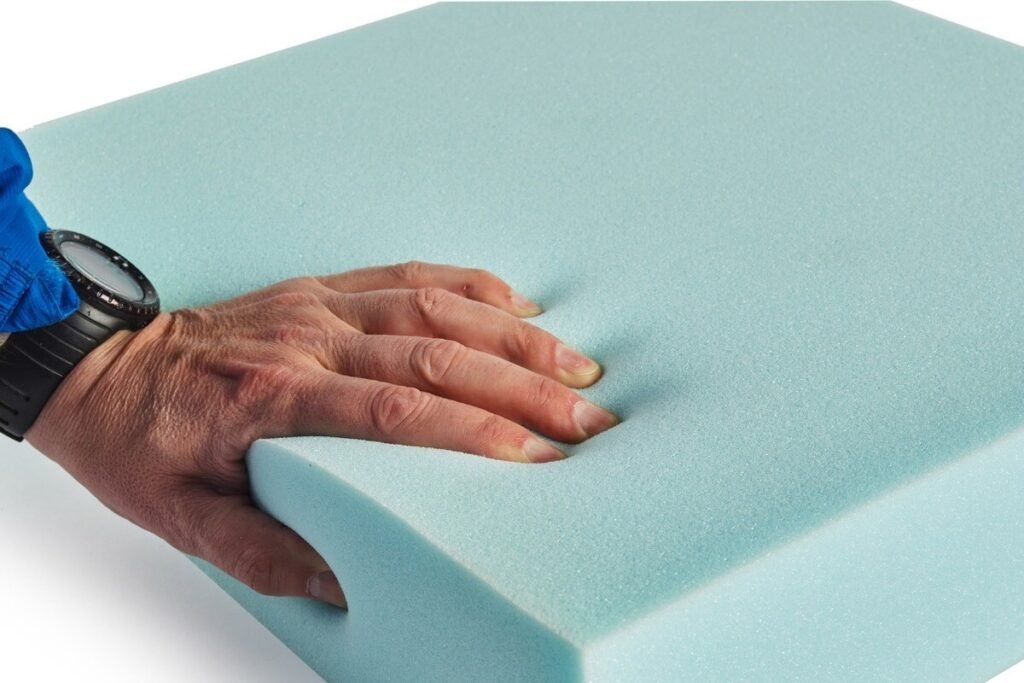
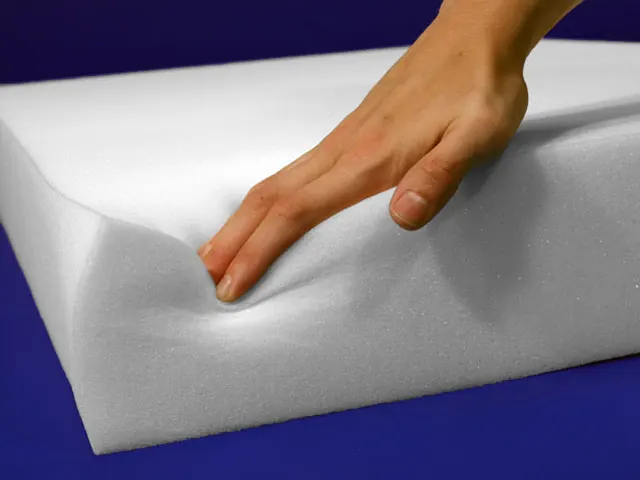
| The Quick Recovery | Press your fist deep into the cushion and let go. | It should “snap” back instantly. A slow recovery or a lingering handprint suggests weak cell structure. |
| Ask for Specs | Ask the salesperson for the density rating. | Professional makers know their numbers. Always seek a rating of 28 or higher. |
Final Word: Quality Starts on the Inside
Don’t just look at the price tag; look at the annual cost of use. A cheap $500 sofa that sags in two years is far more expensive than a $1,500 sofa that remains pristine for twelve.
Investing in high-density foam is an investment in your home’s comfort and your own well-being. When your furniture is built to last, you stop worrying about sagging seats and start focusing on the memories made sitting on them.