When you’re designing a custom sofa or restoring a cherished family heirloom, the most important decision isn’t actually the fabric—it’s what’s inside. While the upholstery provides the style, the foam core provides the soul.
Most of us buy a sofa after sitting on it for five minutes in a showroom. But real quality is hidden in the molecular density beneath the surface. Choosing the wrong foam can mean the difference between a sofa that stays plush for a decade and one that collapses into a flat, lumpy mess within six months.
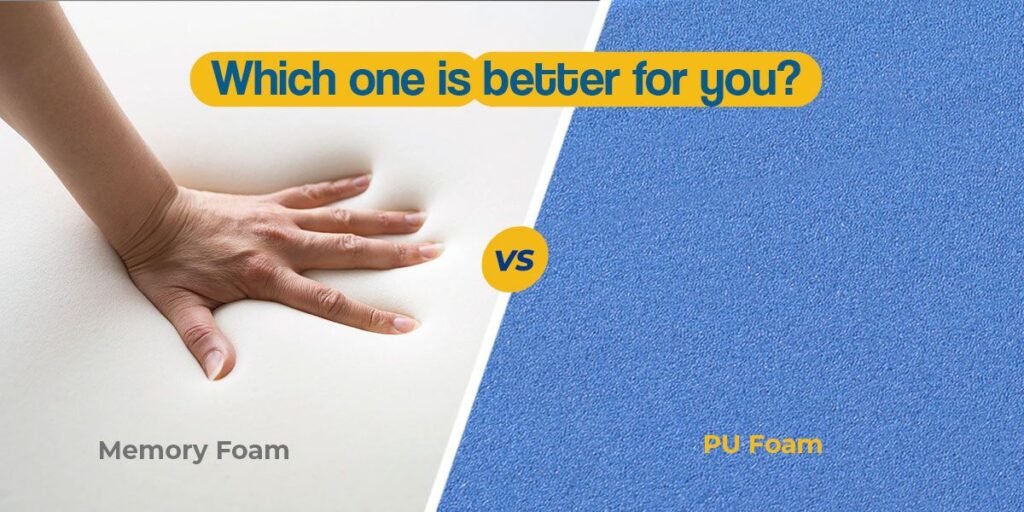
Here is everything you need to know about Polyfoam vs. Memory Foam to ensure your investment stands the test of time.
1. Polyurethane Foam (Polyfoam): The Versatile Workhorse
Polyfoam is the backbone of the furniture industry. Its popularity comes from its incredible versatility; it can be manufactured to be as soft as a cloud or as firm as a bench.
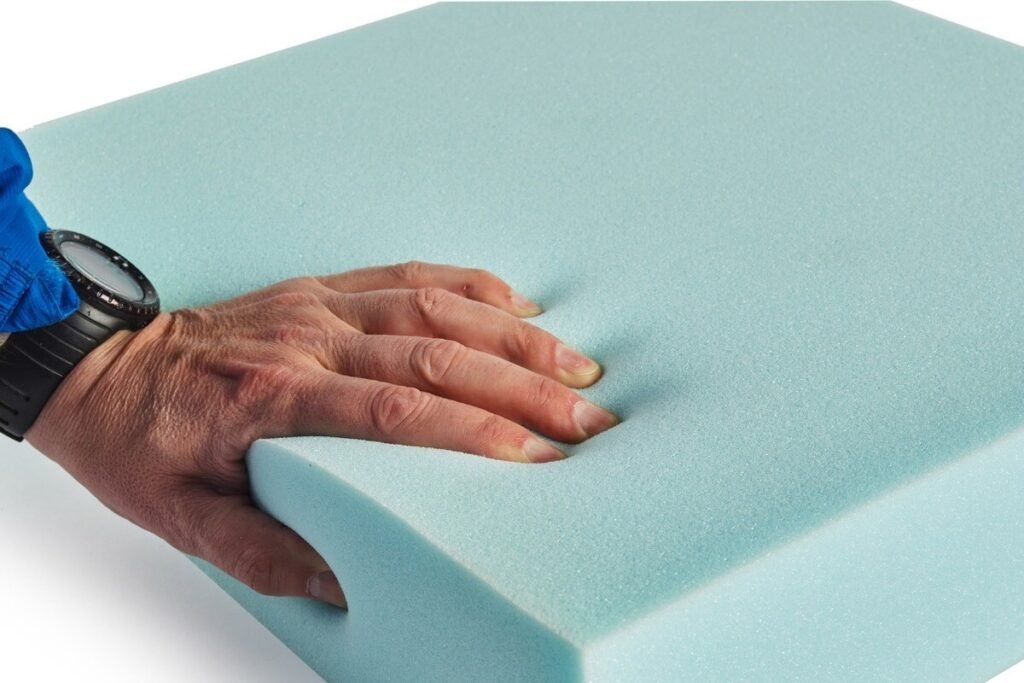
- The Sensation: Polyfoam is “bouncy.” It has a quick recovery time, meaning it springs back the moment you stand up.
- The Support: Because it resists compression, it keeps you sitting on the cushion rather than sinking into the frame.
- Pro Tip: If you want a sofa that lasts, ignore “standard” foam. Always look for High Density (HD) or High Resilience (HR) polyfoam. Cheap, low-density versions are the primary reason why “fast furniture” loses its shape so quickly.
2. Memory Foam (Viscoelastic): The Luxurious Contour
Originally developed by NASA to improve seat safety and comfort, memory foam has become the gold standard for pressure relief. It reacts to both weight and body heat to map your specific shape.
- The Sensation: It offers that “melting” feeling. It contours to your body, eliminating the “push-back” sensation of traditional springs or stiff foam.
- The Best Use Case: Using only memory foam for a seat cushion is a mistake—you’d sink straight through to the wooden frame! Instead, it is best used for back cushions or as a top comfort layer.
- The Health Benefit: If you suffer from hip or shoulder pain, memory foam is a lifesaver. It distributes weight evenly, preventing the “pins and needles” feeling during long movie marathons.
3. The “Sandwich” Method: The Secret of High-End Furniture
The best sofas don’t actually make you choose between these two materials. Premium furniture designers use a “hybrid” or sandwich approach to get the best of both worlds.
| Layer | Material | Purpose |
| The Base | 4–5″ High-Density Polyfoam | Provides structural integrity and “spring.” |
| The Wrap | 1–2″ Memory Foam Topper | Adds immediate, hotel-quality luxury and softness. |
Why it works: The polyfoam base prevents you from “bottoming out,” while the memory foam top layer provides that high-end, adaptive feel.
4. Durability and Breathability: What to Watch Out For
Before you commit, consider your environment and lifestyle:
- Heat Retention: Traditional memory foam is known for “sleeping hot” because it traps body heat. If you live in a warm climate, look for gel-infused or open-cell foams. These are engineered with cooling beads or air channels to keep the sofa at a comfortable temperature.
- Longevity: High-Resilience (HR) polyfoam is the champion of durability. It can withstand thousands of “sit-and-stand” cycles without losing its height. Memory foam is also durable, but only if it’s high-quality; low-grade memory foam can eventually lose its “memory” and stay indented.
Final Verdict: Which Should You Choose?
In the end, your choice depends on how you use your living room.
- Choose High-Density Polyfoam if you prefer a supportive, “active” sit and want a sofa that’s easy to get in and out of (perfect for formal sitting rooms or high-traffic family areas).
- Choose a Hybrid (Polyfoam + Memory Foam) if you want an oasis of relaxation. By layering a memory foam topper over a sturdy polyfoam base, you get the orthopedic benefits of contouring without sacrificing the life of your furniture.
Don’t settle for “good enough” foam. When you invest in high-quality interior materials, you aren’t just buying a place to sit—you’re buying years of comfort.