We’ve all been there: you slip into a high-end hotel bed and immediately realize your sheets at home just don’t measure up. There is a world of difference between “just sleeping” and actually waking up feeling recovered. But if you’ve ever wondered why some sheets feel like a dream while others feel like sandpaper after three washes, the secret isn’t magic—it’s a specific formula of weave, thread count, and fiber length.
Let’s look past the marketing fluff and break down what actually turns a piece of fabric into a five-star experience in your own bedroom.
1. The Weave: Crisp Snap or Silky Drape?
Think of the weave as the DNA of your sheets. It’s what decides the texture, how much air flows through the fabric, and how it actually sits on your body. In the world of luxury bedding, two styles really run the show:
- Percale: The “Crisp” Classic Think of a perfectly pressed, high-end white button-down shirt. Percale uses a simple “one-over, one-under” pattern that results in a matte finish and a cool, breezy feel. It’s light, airy, and has that signature “snap” when you shake out the bed in the morning.
- The Vibe: Best for “hot sleepers,” humid summer months, and anyone who loves that freshly-laundered, hotel-crisp sensation.
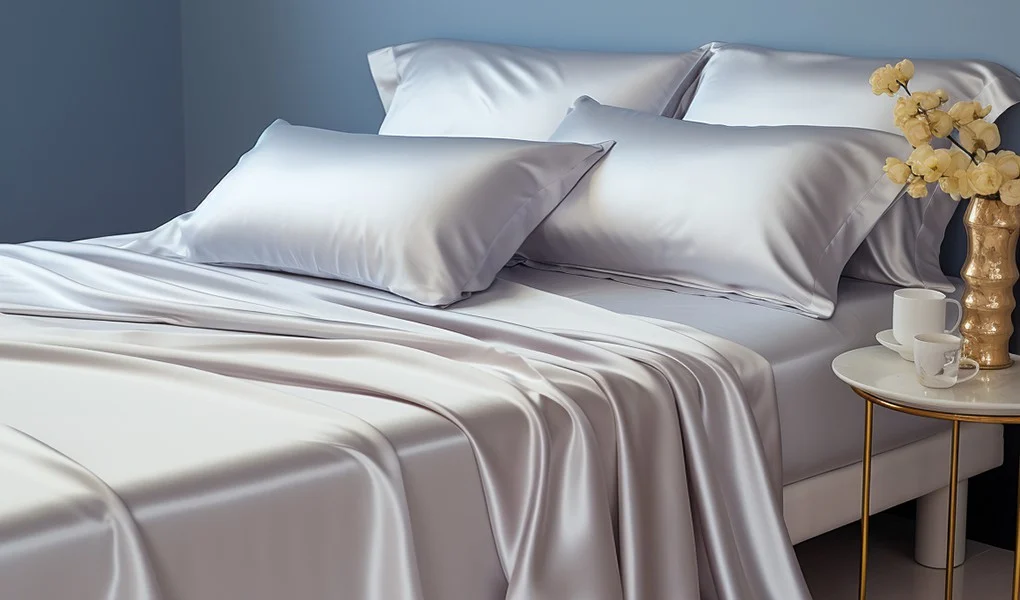
- Sateen: The “Silky” Specialist Sateen is woven differently—usually four threads over and one under. This exposes more of the thread surface, creating a buttery-soft texture with a subtle, expensive-looking sheen. It’s naturally a bit heavier and drapes elegantly over the edges of the mattress.
- The Vibe: Best for those who want to feel “enveloped” in their bed, cooler nights, or anyone who prefers a smooth, almost liquid-like touch.
2. Thread Count: Why More Isn’t Always Better
For years, brands have used “Thread Count” as a bit of a weapon, tricking us into thinking that a 1,000+ count is the gold standard. It’s time to bust that myth.
Most genuine luxury sheets actually hover between 300 and 600. Why? Because when you try to cram 1,000 threads into a single square inch, you have to use thinner, weaker threads or “multi-ply” yarns. This usually results in a fabric that is:
- Heavy and stiff: It loses that graceful, light drape.
- A Total Heat Trap: The weave becomes so tight that air can’t circulate, which is a recipe for night sweats.
- Less Durable: Poor quality threads bundled together tend to pill and fray much faster.
The Pro Tip: Focus on the quality of the thread, not the quantity. A 400-count sheet made from premium cotton will beat a 1,200-count “bargain” sheet every single time.
3. Fiber Length: The “Hidden” Quality Marker
If the weave is the DNA and thread count is the density, fiber length (or “staple”) is the soul of the sheet. This is the part most people overlook.
Cotton fibers come in different lengths. Long-Staple and Extra-Long Staple (ELS) cottons—like Egyptian or Pima—are the best of the best.
- Why it matters: Longer fibers can be spun into much finer, stronger yarns. This means fewer “ends” sticking out of the thread, so the surface stays incredibly smooth and won’t “pill” (those annoying little fuzz balls) over time.
- The Investment: Sheets made from long-staple fibers actually get softer every time you wash them. Cheap, short-staple sheets usually start to feel scratchy and thin after just a few months.
The Ultimate Takeaway
Luxury isn’t about finding the highest number on the package; it’s about how these three things work together.
- If you want a bed that feels like a cool, breezy retreat: Go for 300-400 Thread Count Percale made with Long-Staple Cotton.
- If you want a cozy, indulgent sanctuary: Look for 400-600 Thread Count Sateen.
Life is too short to spend eight hours a night on mediocre fabric. Your bedroom should be your refuge, and with the right sheets, every night can feel like a mini-vacation.