When we go to buy a new couch or reupholster an old chair, the price is usually the first thing we see. It’s easy to pick the lower estimate when there are so many “budget-friendly” options on the market. The foam inside the furniture is what makes it so expensive, not the fabric.
One of the most common mistakes people make when buying furniture is choosing low-density foam to save money up front. It looks just like high-end foam on the showroom floor, but its performance changes quickly. This guide talks about why putting foam density ahead of a low price tag is the only way to make sure your furniture stays an investment instead of a cost that comes up again and again.
Getting to Know the Density Trap
People often mix up “firmness” and “density” when it comes to upholstery. When you first buy it, a low-density foam can be chemically treated to feel very stiff and firm. This phenomenon is the “density trap”: people buy a sturdy sofa thinking it will last, but it falls apart soon after the first few weeks of use.
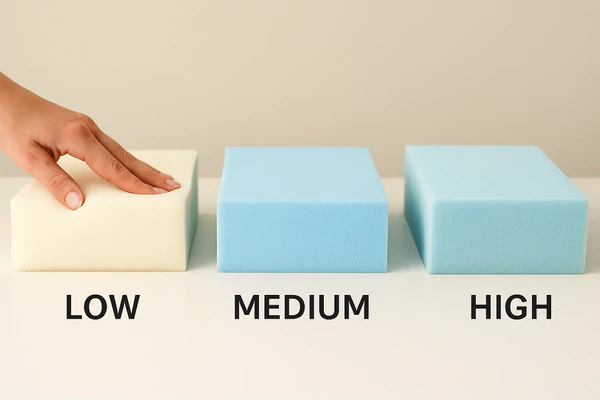
- Low-Density Foam (15–20 kg/m³): There is more air in this material than polymer. The cell walls are thin and weak, so they break easily when you sit down and put stress on them.
- High-Density Foam (28–35 kg/m³): This has a very dense molecular structure. It is made to hold weight without losing its height or ability to “bounce back.”
- The “Puddling” Effect: A Visual Sign of Failure
One of the first costs of low-quality foam is that it looks awful. Low-density foam stops being able to “bounce back” after a year. As a result, puddling happens, which is when the foam base has flattened and the fabric on your seat cushions becomes wrinkled and loose. You don’t just need new foam to fix this; you often need to hire a professional upholsterer to restitch and refill the piece, which will cost you twice as much as you originally spent. - The Secret Health Cost: Not Getting Help
You can use furniture to get better, not just to sit on. When you sit on low-density foam, the material “bottoms out,” which means that your weight finally rests on the rigid frame of the furniture, which is made of wood or metal.
- Spinal Strain: If you don’t get enough regular support, your back muscles have to keep working to stay balanced instead of relaxing.
- Joint Pressure: High-quality foam gives you a “push-back” force that spreads your weight evenly, so your hips and lower back don’t get painful pressure points.
- Durability that keeps your money safe
The most durable foam for furniture has a high support factor. This is the foam’s ability to stay comfortable even when it is compressed. We test premium foams cautiously for “fatigue loss” to make sure they don’t break down or turn into dust inside your cushions over time. Using a material with a lot of density makes sure that the level of comfort stays the same from day one to year ten.
The Final Decision: Why Quality is the Only Real Deal
When it comes to budget vs. quality, quality is the only choice that really saves you money. A low-density foam cushion is basically a one-time-use item that hurts the environment and costs you money over and over again. By insisting on high-density materials (at least 28 kg/m³ for seating), you are guaranteeing a decade of comfort, spinal health, and aesthetic perfection. In the end, the best furniture is the kind you only have to buy once. Buying high-quality foam isn’t just a luxury; it’s a smart financial move that will keep your home a safe place to relax for years to come.