Ever wake up because your partner turned over on their side of the bed? That small jolt, repeated every night, adds up to years of broken sleep for both of you. The best mattress for couples isn’t just about softness or size. It’s about how well the mattress handles two people moving, shifting weight, and sleeping at different temperatures through the night. Get that wrong, and even a good mattress feels like a bad one.
What Makes a Mattress Good for Two People
A mattress built for couples needs to do a few things well at once:
- Absorb movement so one partner’s toss doesn’t wake the other
- Support two different body weights without sagging unevenly on one side
- Stay cool through Pakistan’s long, humid summers
- Hold its shape over years of nightly use by two people instead of one
Most mattresses are designed and tested with a single sleeper in mind. That’s why couples often end up disappointed with a mattress that felt fine in the showroom but falls short at home.
Why Motion Transfer is the Real Problem
Motion transfer is the technical term for what happens when movement on one side of the mattress travels to the other side. On a basic spring mattress, the springs are often connected by wire, so the whole surface reacts like a trampoline. One partner shifts, and the other feels it.
This is usually the biggest complaint couples have, even more than firmness. A late-night bathroom trip, a restless leg, or simply rolling over can interrupt a partner’s sleep cycle without either person realizing why they woke up tired.
How Pocket Spring Mattresses Solve This
Pocket spring mattresses take a different approach. Instead of one connected coil system, each spring is wrapped individually in fabric and compresses on its own, without pulling on the springs around it. That structure is what makes a real difference for couples sharing a bed.
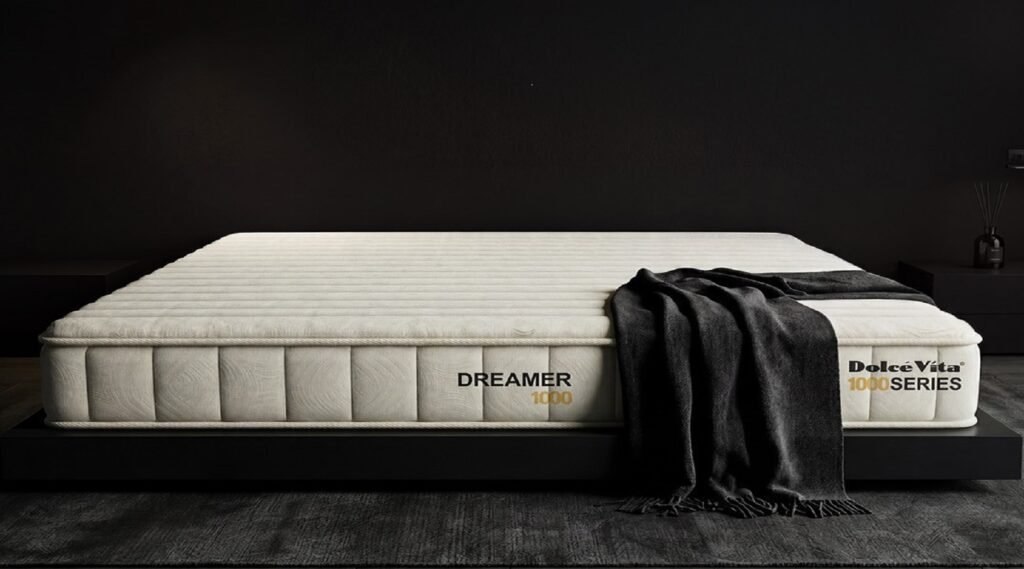
Dolce Vita has built its Dreamer 1000 mattress around this idea, using 1,000 individually wrapped pocket springs. The goal is straightforward: when one person moves, the other side of the bed stays undisturbed.
Zero Motion Transfer, Explained Simply
This feature is called Zero Motion Transfer. In practical terms, it means the mattress isolates movement at the exact spot where pressure is applied, rather than letting it ripple across the surface. For a couple with different sleep schedules, one partner reading late or getting up early, this kind of isolation can be the difference between a full night’s rest and a fragmented one.
Read More: How Dreamer 1000 Reduces Partner Disturbance
Choosing the Right Firmness Together
Couples don’t always agree on firmness, and that’s normal. A general guide:
| Sleep style | Suggested firmness |
| Both partners sleep on their side | Medium to medium-soft |
| Mixed positions (side and back) | Medium |
| Heavier partner or back sleepers | Medium-firm to firm |
If you and your partner have noticeably different preferences, a pocket spring mattress tends to handle that better than solid foam, since each side responds to its own weight independently.
Sizing for Pakistani Homes
Queen and king sizes are the standard choices for couples in Pakistan, with king being the more common pick for larger bedrooms or households that also share the bed with young children occasionally. Before buying, measure your bed frame and the room itself. A king mattress in a small room can make the space feel cramped, while a queen in a large master bedroom can look undersized.
Climate Considerations for Pakistani Bedrooms
Heat retention is a real concern for couples sleeping close together, especially during summer months in cities like Lahore, Karachi, and Islamabad. Look for a breathable cover fabric and a mattress structure that allows airflow rather than trapping heat, since two bodies generate noticeably more warmth than one.
Care Tips That Extend a Couple’s Mattress Life
- Rotate the mattress every few months to prevent uneven wear from consistent sleeping positions
- Use a mattress protector to guard against moisture and dust
- Avoid sitting on the same edge repeatedly, as this can weaken support over time
- Air out the room regularly to reduce humidity buildup in the mattress
A mattress built for two people, cared for properly, should serve a couple reliably for years without one side wearing out faster than the other.
Choosing a mattress as a couple means thinking beyond individual comfort and considering how well the bed handles two people, two weights, and two sets of habits night after night.
Also Read: Why Choose Dreamer 1000 Memory For Comfortable Sleep
Frequently Asked Questions
What is the best mattress type for couples who move a lot at night?
Pocket spring mattresses generally handle movement better than connected coil or basic foam mattresses, since each spring compresses independently and doesn’t transfer motion to the rest of the bed.
Is a king size or queen size better for couples in Pakistan?
It depends on room size and personal space needs. King size gives more room to spread out, while queen size works well in smaller bedrooms without feeling cramped.
Can couples with different firmness preferences use the same mattress?
Yes, especially with pocket spring designs, since each side of the mattress responds independently to the weight and movement of the person on it.
How often should a couple’s mattress be replaced?
Most mattresses need replacing every seven to ten years, though this can vary based on usage, mattress quality, and how well it’s maintained.
Does mattress firmness affect motion transfer between partners?
Firmness and motion isolation are related but separate factors. A mattress can be firm and still transfer motion if its internal structure isn’t designed to isolate movement, which is why the spring or foam construction matters more than firmness alone.