
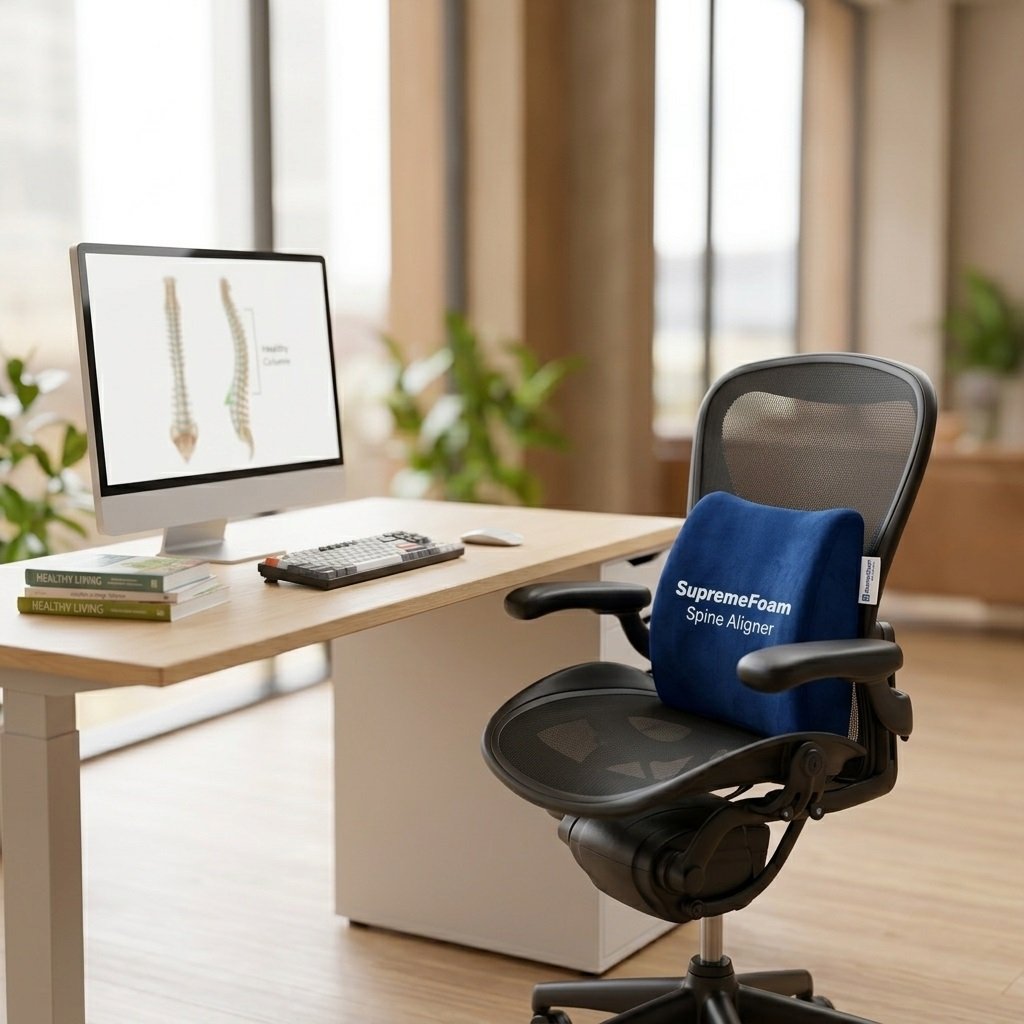
Bought a back support cushion but still feel stiff by the end of the day? Chances are you’re using it the wrong way. A back care cushion only works if it’s placed correctly, adjusted to your chair, and used consistently, not just propped behind you for a few minutes here and there.
This guide walks through the correct way to use a back care cushion, common mistakes people make, and how to pick one that actually supports your lower back.
Why Correct Placement Makes the Biggest Difference
A back care cushion is meant to fill the gap between your lower spine and the backrest of your chair. Most office chairs and car seats curve inward at the base, leaving that area unsupported. When the cushion sits too high, too low, or too loose, it stops doing its job.
The goal is to keep your lumbar spine’s natural inward curve supported while you sit, so your back muscles don’t have to work overtime to hold you upright.
Step-by-Step: How to Position a Back Care Cushion
- Sit all the way back in your chair. Your hips should touch the base of the backrest before you place the cushion.
- Locate your lower back curve. This is roughly at belt height, just above your hip bones.
- Place the cushion at that curve, not higher. A common mistake is positioning it too high, near the mid or upper back, which pushes you forward instead of supporting the lumbar region.
- Adjust the straps if your cushion has them. Straps keep the cushion from sliding down during the day, especially on chairs with smooth or reclining backrests.
- Check your posture. Your ears, shoulders, and hips should roughly align in a straight vertical line when the cushion is positioned correctly.
If you still feel a gap behind your lower back after sitting for a minute, the cushion needs to move slightly higher or lower until that gap closes.
Common Mistakes That Reduce a Cushion’s Effectiveness
- Using it only when pain starts. The best back support cushion for office chairs works as a preventive habit, not a reaction to discomfort that’s already set in.
- Placing it on soft or reclining seats without adjustment. Cushions shift more on cushioned or reclining chairs, so straps or non-slip backing help keep them in place.
- Ignoring seat height and desk setup. A back care cushion can’t fix problems caused by a desk that’s too high or a monitor positioned too low.
- Choosing the wrong firmness. A cushion that’s too soft compresses flat within weeks and stops providing real support.
- Forgetting car seats. Long drives on Pakistan’s highways, whether it’s Lahore to Islamabad or a longer route toward Karachi, put steady pressure on the lower back, and a portable back support cushion helps during those stretches too.
What to Look for When Choosing a Back Support Cushion
Contour and Curve
The cushion should have a defined curve that matches the natural shape of your lower spine, rather than a flat or generic rectangular pad.
Firm Yet Responsive Foam
A cushion that’s too soft won’t hold its shape through a full workday. Firmer foam that still gives slightly under pressure tends to hold support longer.
Breathable Cover
Since many people use these cushions daily at desks or during long commutes, a breathable mesh or fabric cover helps prevent heat buildup, particularly during warmer months.
Adjustable Straps
Straps that fasten around the chair keep the cushion locked in place instead of sliding as you shift positions throughout the day.
Why the Supreme Spine Aligner Stands Out
Among the back support cushions available, the Supreme Spine Aligner from Diamond Foam is worth considering if you want a cushion built specifically around lumbar contouring. It’s designed with a defined curve that follows the lower spine’s natural shape, rather than a flat, one-size pad that most generic cushions rely on.
The firmness level is built to hold its shape through long hours of desk work or driving, which matters more than initial softness when you’re using a cushion daily. For anyone comparing back care cushions and wanting one designed with correct lumbar positioning in mind, the Supreme Spine Aligner is a solid option to look into before making a decision.
A back care cushion isn’t a one-time fix. It works when it’s placed correctly, adjusted to your seat, and used every time you sit down for long stretches, whether at a desk, in a car, or on a flight.
Frequently Asked Questions
Where exactly should a back support cushion be placed?
It should sit at the curve of your lower back, roughly at belt height, filling the gap between your spine and the chair’s backrest. Placing it too high pushes your upper back forward instead of supporting your lumbar area.
Can a back care cushion fix existing back pain?
A back care cushion can reduce strain and improve posture, but it isn’t a treatment for existing back conditions. If pain persists or worsens, it’s best to consult a doctor or physiotherapist alongside using proper seating support.
How do I know if my back support cushion is the right firmness?
The cushion should hold its curve under your weight without flattening completely within a few weeks. If you feel the cushion bottoming out or losing shape quickly, it’s too soft for daily use.
Is a back care cushion useful for car seats too?
Yes, back care cushions work well in cars, especially during long drives where the seat’s built-in lumbar support is minimal or non-adjustable. A portable cushion with straps stays in place better on car seats than one without.
How often should a back support cushion be replaced?
Most back support cushions last one to two years with daily use before the foam starts to lose its shape and support. If the cushion feels noticeably flatter or the curve has softened, it’s a sign to replace it.